You Don’t Have Time Not to Have a Plan
You drove to the gym. You changed. You're standing in front of the rack. And now you're trying to figure out what to actually do.
Upper body? Legs? You have a vague idea. But the specifics aren't there. Sets, reps, weight, rest time… the questions start piling up. You came here to train, not to plan a training session. You've been making decisions all day. Work, kids, money, food. The gym was supposed to be the one place where you don't have to think. Instead, you're standing there running another meeting with yourself.
Surprising Research Ranking Top 6 Reasons Why Men Over 40 Workout
So what actually drives men over 40 to keep showing up at the gym? Not what the fitness industry assumes. Not what the supplement ads suggest. What the research says. I went looking for real answers in peer-reviewed studies, large consumer surveys, CDC data, to build a defensible ranking of what motivates men our age to train. The findings confirmed some of what I expected and challenged a few things I thought I knew.

After 40, Why Do You Workout?
What do you actually care about when it comes to your fitness goals? What's your why? Why do you train?
Check out this list and tell me what resonates, and what's missing.

Why Tennis May Be the Best Sport for Longevity
Tennis is not linear. The ball comes where it comes. You have to read it, move to it, organize yourself around it, and answer under time pressure. That means speed, coordination, balance, deceleration, rotation, judgment, and emotional control. That also means you are training the body and the nervous system at the same time. The Atlantic article notes that tennis demands complex motor coordination and rapid decision-making, and cites the fact that it can remain a true lifetime sport, played across decades.

After the Hunt: Loaded Walking for Men Over 40
The hunter still has to get the kill home.
That means lifting it, stabilizing it, and carrying it over uneven ground. Carrying is such a fundamentally human ability that it helps define us. The ability to carry objects, particularly while walking upright (bipedalism), is a key trait that makes humans unique. The combination of bipedalism, complex tool-making, and high intelligence that sets humans apart.

5 Alternatives to Scrolling Between Sets
What do you do between sets?
Me?… I was texting, making calls, replying to Slack messages, checking the news, and doomscrolling. I told myself I was multitasking. Really, I was dragging stress into my workout and leaving the gym more distracted than when I walked in.
The Top 5 Trouble Spots for Men 40+
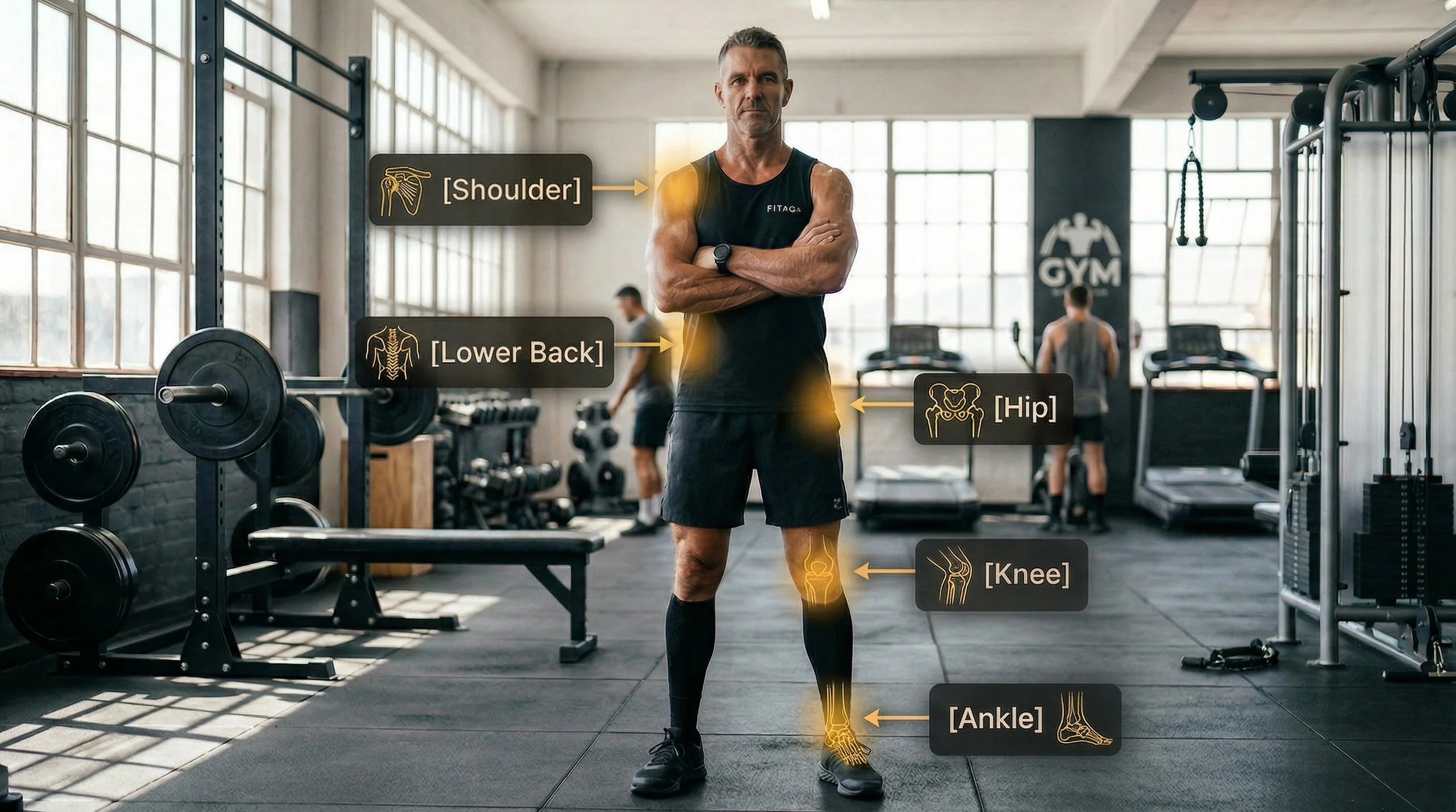
There is a point, usually sometime after forty, when the body stops letting things slide. A shoulder you ignored in your twenties starts talking every time you reach overhead. Your hips tighten after a long drive. Your knees complain on stairs. Your low back reminds you that sitting is not rest, and that lifting alone does not fix everything.
Willpower Is Overrated. Design Your Workout So You Don’t Need It.
Psychologist Angela Duckworth, author of the book Grit, is now saying the quiet part out loud:
Willpower is overrated.
In a recent New York Times essay, she argues that successful people rarely rely on raw inner strength in the heat of the moment. Instead, they practice what she calls situational agency. They arrange their lives so they don’t need much willpower in the first place.
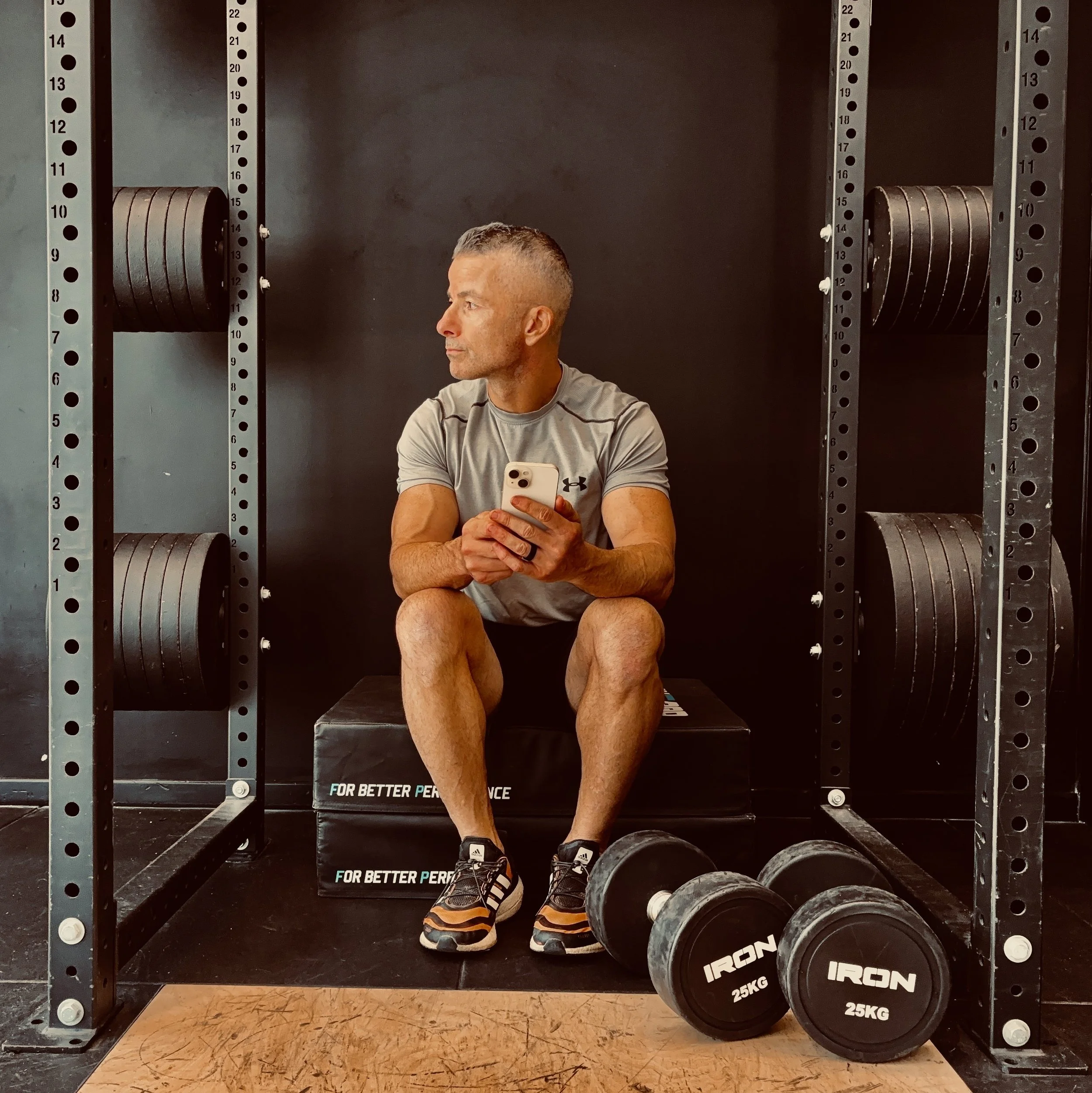
How your phone is quietly wrecking your workouts, and how to use it to save them.
The moment that snapped it into focus wasn’t some grand epiphany. It was a stat on my training app:
Total workout time: 55 minutes
Active workout time: 22 minutes
I stared at it like it was a typo.
Because if I’m only lifting for 22 minutes… what am I doing with the other 33?

Stronger Everywhere: The Benefits of Full-Body Training After 40
“Full-body” can sound like you’re doing a little bit of everything and spinning your wheels. Done right, it’s the opposite. It’s you saying: Every time I train, my whole body gets better. Muscles respond well to being trained often.

Why Men Over 40 Need Yoga
Somewhere after forty, most men get used to a low, steady background noise in their bodies. A tight hip that never really lets go. A back that complains after long drives. You can still lift, still grind, still “push through,” but you’re doing it inside a frame that feels more like armor than a home.
You tell yourself it’s age. Mostly, it’s neglect.

When to Back Off: Why Deload Weeks Matter More After 40
At some point in your forties, a quiet tension shows up in your training. You can still push. But the cost of every hard session hangs around longer than it used to. That’s where deload weeks stop being optional.
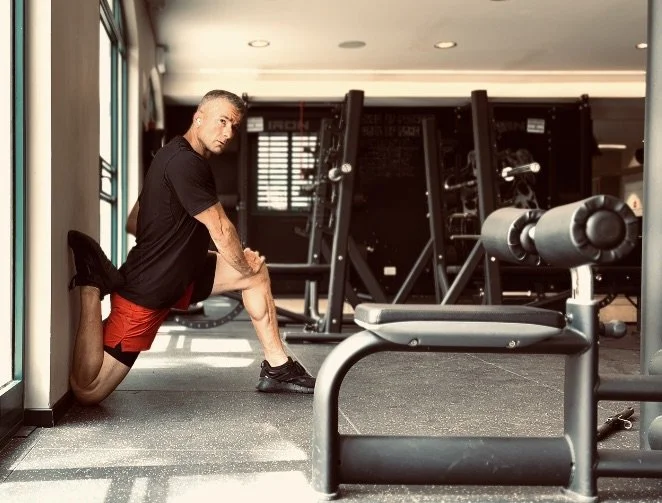
Why Mobility Matters More after 40
At some point after forty, most men feel a quiet shift. The weight on the bar isn’t the problem; getting into position is. Your hips don’t sink as low, your shoulders don’t open as easily, and your back complains when you bend to tie your shoes.

Top 5 Reasons Men Over 40 Workout
By your 40s and 50s, the reasons you train aren’t the same as they were in your 20s. Research on older adults shows that the biggest drivers of exercise are health, fitness, appearance, mental well-being, and enjoyment.